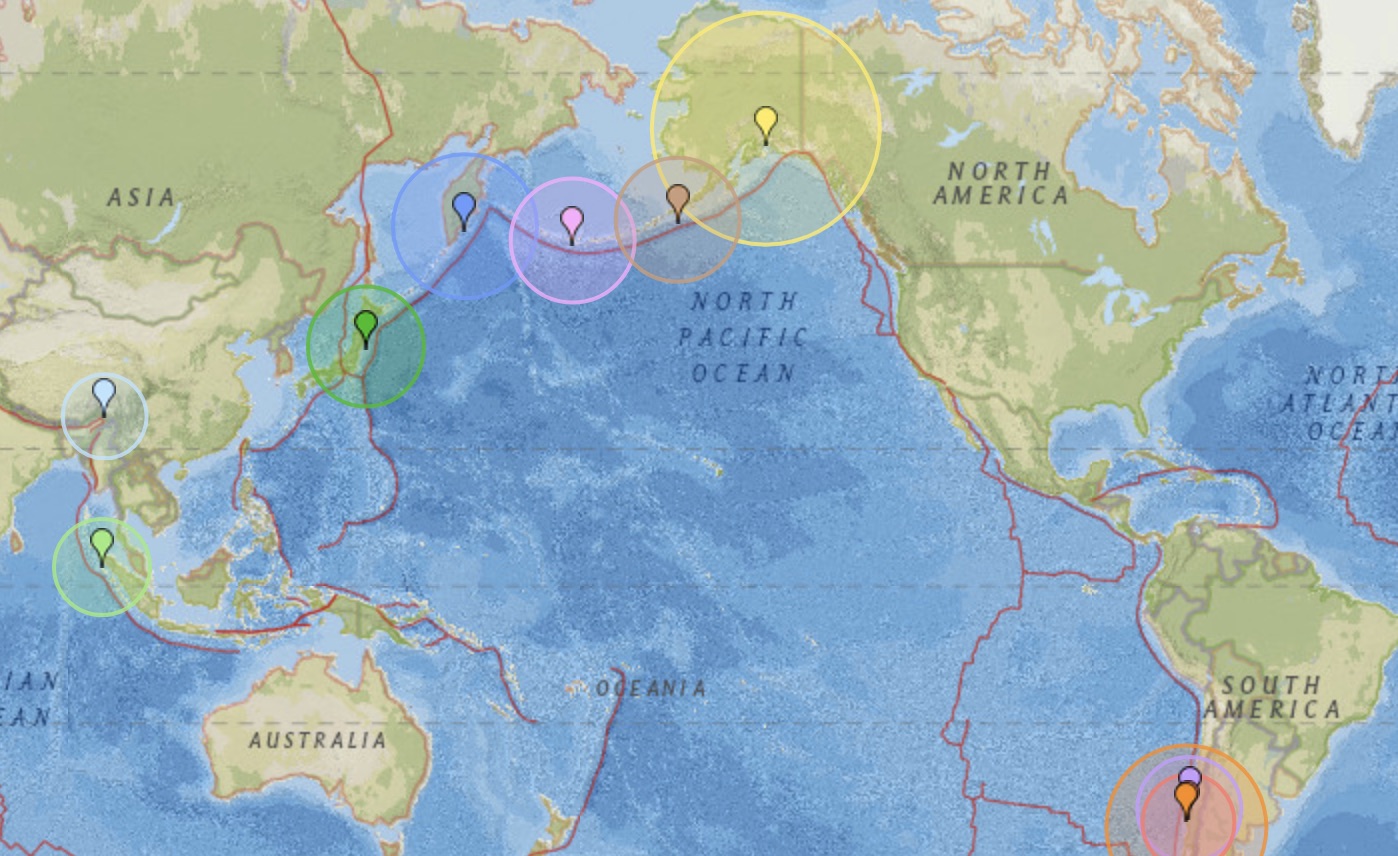
Real-Time Earthquake Tracker: Monitoring Latest Global Quakes Today
In an ever-shifting world, understanding the dynamic forces beneath our feet is crucial for safety, research, and preparedness. The Earth's crust is in constant motion, and with this movement comes the reality of earthquakes. For anyone seeking immediate, accurate information on seismic activity, a real-time earthquake tracker is an invaluable resource. This comprehensive guide delves into how we monitor earthquake today, what the data means, and why staying informed about the latest global quakes is more important than ever. The ability to track seismic events as they happen, from minor tremors to significant shakers, provides critical insights into our planet's geological health. From the Ring of Fire to the Mediterranean-Alpine belt, no region is entirely immune to seismic activity. Our focus here is to provide a continuously updated overview of today's strongest earthquakes worldwide, offering detailed information on their location, depth, and timing. By leveraging data from authoritative sources, we aim to deliver clarity and context around these powerful natural phenomena.The Pulse of Our Planet: Why Tracking Earthquakes Matters
The Earth is a living, breathing entity, its surface constantly being reshaped by tectonic forces. Earthquakes are a stark reminder of these profound geological processes. For millions living in seismically active regions, awareness of an earthquake today isn't just a matter of scientific curiosity; it's a matter of life and safety. Real-time earthquake tracking offers several critical benefits:- Immediate Awareness: For emergency services, government agencies, and the general public, knowing about a significant quake immediately allows for rapid response, damage assessment, and potential Tsunami warnings.
- Scientific Research: Seismologists rely heavily on continuous, real-time data to study fault lines, understand earthquake mechanisms, predict future seismic behavior, and improve building codes.
- Public Education and Preparedness: Consistent tracking helps educate communities about their seismic risk, encouraging preparedness measures that can save lives.
- Global Context: Understanding the patterns of today's strongest earthquakes worldwide provides a macro perspective on global plate tectonics and helps identify regions of increased stress.
How Real-Time Earthquake Tracking Works: Behind the Data
The sophisticated systems that bring you real-time updates on global quakes today are a marvel of modern science and technology. At their core are thousands of seismometers strategically placed across the globe. These sensitive instruments continuously record ground motion, detecting even the slightest vibrations caused by seismic waves. When an earthquake occurs, these waves travel through the Earth's layers, reaching multiple seismometers. The data collected by these sensors – including the arrival times of different wave types (P-waves and S-waves) and their amplitudes – is instantly transmitted to central processing centers. Highly trained seismologists and advanced algorithms then analyze this raw data to pinpoint critical information:- Location (Epicenter): By triangulating the arrival times of seismic waves at different stations, the exact epicenter of the earthquake can be determined.
- Depth (Hypocenter): Analyzing the various wave patterns helps determine how deep beneath the surface the earthquake originated.
- Magnitude: This is a measure of the energy released by the earthquake, calculated from the amplitude of the seismic waves.
- Timing: The precise moment the earthquake occurred.
Decoding the Details: Understanding Today's Quake Data
When you access an earthquake today tracker, you'll typically encounter several key pieces of information for each event. Understanding what these details mean is essential for grasping the impact and significance of a particular quake:- Magnitude (M): This scale quantifies the energy released. Our trackers typically focus on earthquakes greater than M4.5, and often M5 or higher, as these are generally strong enough to be felt over a wide area and cause potential damage, especially at shallower depths. It's a logarithmic scale, meaning an M5 quake is ten times larger in amplitude than an M4, and releases about 32 times more energy.
- Location: This indicates the earthquake's epicenter, typically given by latitude and longitude, and often accompanied by a geographical descriptor (e.g., "75 km NW of Padang, Indonesia"). Knowing the location helps assess the proximity to populated areas.
- Depth: Measured in kilometers from the Earth's surface, depth is a critical factor in determining an earthquake's impact. Shallow quakes (0-70 km) tend to cause more intense shaking and damage on the surface compared to deeper quakes of the same magnitude, as the seismic energy has less distance to dissipate.
- Timing: The exact date and time (often in UTC – Coordinated Universal Time) the earthquake occurred. This helps in understanding the sequence of events and aftershocks.
Staying Safe: Practical Tips and Preparedness for Earthquakes
While technology allows us to track an earthquake today with remarkable precision, preparedness remains our most potent defense against their potential devastating effects. Being informed is the first step, but actionable measures are vital for safety.Before an Earthquake: Plan and Prepare
- Develop an Emergency Plan: Discuss with your family what to do during an earthquake, how to contact each other if separated, and where to meet afterward.
- Prepare an Emergency Kit: Assemble a kit with at least three days' worth of water and non-perishable food, a first-aid kit, a whistle, a flashlight with extra batteries, a multi-tool, copies of important documents, and any necessary medications.
- Secure Your Home: Fasten shelves to walls, secure water heaters and gas appliances, store heavy items on lower shelves, and identify safe spots (e.g., under sturdy furniture) in each room.
- Know Your Building: Understand the structural integrity of your home or workplace and identify potential hazards.
During an Earthquake: Drop, Cover, and Hold On
- If Indoors:
Drop to the ground. Cover your head and neck with your arms, and if possible, crawl under a sturdy table or desk. Hold On to your shelter until the shaking stops. Stay away from windows, heavy furniture, and falling objects.
- If Outdoors:
Move to a clear area away from buildings, power lines, trees, and streetlights. Drop to the ground and cover your head and neck.
- If in a Vehicle:
Pull over to a clear location, stop, and stay inside with your seatbelt fastened until the shaking stops. Avoid overpasses, bridges, and tunnels.
After an Earthquake: Assess and React
- Check for Injuries: Administer first aid if needed.
- Be Aware of Aftershocks: These can occur minutes, days, or even weeks after the main quake. Continue to follow "Drop, Cover, and Hold On" procedures.
- Check for Damage: Inspect your home for gas leaks (smell for gas, listen for hissing), electrical shorts, and structural damage. If you suspect damage, evacuate and call authorities.
- Listen to Authorities: Tune into local news or NOAA Weather Radio for emergency information and instructions.
- If Near the Coast: Be aware that a strong earthquake, even one felt far offshore, can trigger a tsunami. Head for higher ground immediately if advised or if you observe unusual ocean behavior.